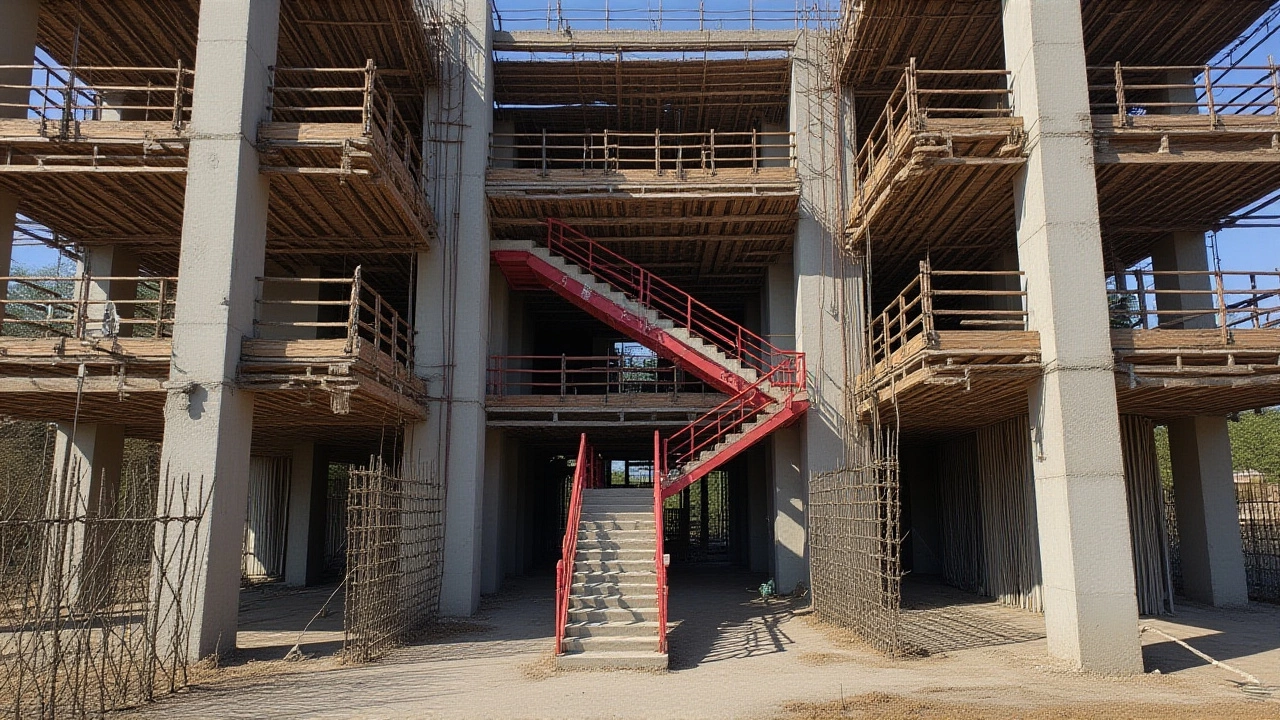
On September 21, 2025, as UP Sidco Chairman personally toured the under-construction 18 crore Critical Care Center in Rampur, a separate team of anti-corruption officers in Saharanpur arrested a Junior Engineer and another official mid-bribe—caught red-handed accepting cash to fast-track permits. The timing wasn’t coincidental. While the state flaunted its infrastructure ambitions, whispers of systemic graft echoed from village panchayats to top-tier development authorities.
Caught in the Act: Saharanpur’s Bribery Bust
The Saharanpur Development Authority raid, executed by a specialized anti-corruption unit, sent shockwaves through local contractors. The two officials, whose names remain withheld pending formal charges, were intercepted with cash in hand—though the exact amount wasn’t disclosed. What’s clear: this wasn’t an isolated incident. For months, contractors had quietly reported delays unless they paid "speed money." One anonymous builder told reporters, "They don’t even ask anymore. They just hold out their hand." The operation, part of a broader crackdown, followed a whistleblower tip from an internal clerk who’d grown tired of seeing public funds vanish into private pockets.
A Systemic Problem: From Sanitation Workers to Doctors
That same day, in Kausambi, a sanitation worker was arrested for taking ₹5,500 to process a file—yes, a file. For a job that pays ₹18,000 a month, that’s nearly a third of his salary. It’s not greed alone; it’s desperation, and a system that rewards corruption as the only way to get things done. Meanwhile, the Central Bureau of Investigation had already uncovered a far more brazen case in July 2025: three doctors in Prayagraj accepting ₹55 lakh to falsify medical reports. The investigation, led by whistleblower Ravi Shankar Maharaj, led to eight arrests total. The doctors allegedly altered test results to help patients qualify for insurance payouts—something that could have cost lives if the fraud went undetected.
Infrastructure vs. Integrity: The Stark Contrast
While the UP Sidco Chairman stood beside blueprints for the 18-crore Critical Care Center—set to serve 200,000 rural residents annually—his team knew the money could easily be siphoned. Construction contracts worth over ₹200 crore are currently under review. In 2023, a similar facility in Bareilly was delayed by 14 months after ₹42 crore went missing. This time, the government says it’s using blockchain-based tender tracking. But as one senior bureaucrat admitted off-record: "Technology helps. But if the people running it are corrupt, the system just becomes a fancy ledger for theft."
More Scandals, More Questions
It didn’t stop there. On September 21, authorities also uncovered a cyber fraud ring selling bank accounts for as little as ₹15 to criminals—over ₹5 crore laundered through 1,200 fake accounts. And in Nashik, a separate case on November 19, 2025, saw ₹13.6 lakh stolen from elderly victims through fake government subsidy schemes. Meanwhile, in Ayodhya, the state announced a ₹10,000 flat fee for ancestral property division—a move meant to reduce bureaucratic hassle. Yet, officials in nearby districts are still demanding ₹50,000 to "expedite" the same process. The message? Simplify the rules, and corruption just finds new ways to survive.
What’s Next? Recruitment, Oversight, and Public Trust
Even as corruption cases mount, UP Sidco continues recruiting for Group 'Kha' positions through the Uttar Pradesh Public Service Commission. Critics argue this is a recipe for disaster: hiring new staff into a rotten system without fixing the incentives. The state claims it’s training recruits in ethics—but no one’s auditing whether those lessons stick. Meanwhile, citizens are losing faith. A recent survey by the India Governance Monitor found that 78% of Uttar Pradesh residents believe corruption has worsened in the past year. Only 12% say they’d report a bribe request, fearing retaliation.
Why This Matters Beyond Uttar Pradesh
This isn’t just a local scandal. Uttar Pradesh’s 240 million people make it the world’s most populous subnational entity. When infrastructure projects worth billions are undermined by petty bribes and medical fraud, the ripple effects are national. Health outcomes decline. Public trust evaporates. Investors hesitate. And the poor—those who need the Critical Care Center most—pay the highest price. The Chairman’s inspection was symbolic. But symbols don’t build hospitals. Accountability does.
Frequently Asked Questions
How much public money is at risk in UP Sidco projects?
Over ₹200 crore in current UP Sidco infrastructure contracts are under scrutiny, with the 18-crore Critical Care Center in Rampur being just one of dozens. Past projects, like the Bareilly facility, lost ₹42 crore to fraud—raising fears that similar leakage is happening now. Without transparent tender tracking, experts estimate up to 20-30% of public infrastructure funds may be siphoned off.
Why are low-level employees like sanitation workers involved in bribery?
Many low-wage public employees earn less than ₹20,000 a month, yet face pressure to meet targets, pay bribes to superiors, or simply survive. The ₹5,500 bribe in Kausambi may seem small, but it’s nearly a third of the worker’s monthly pay. It’s not greed—it’s survival in a system where corruption is the only currency that works.
What’s being done to stop corruption in UP Sidco recruitment?
While UP Sidco is hiring through the Uttar Pradesh Public Service Commission, there’s no public record of anti-corruption vetting for candidates. Past recruitment drives have been marred by allegations of quota manipulation and paid positions. Without independent audits of hiring practices, experts warn that new hires may simply inherit the same corrupt culture they’re meant to reform.
Are the recent arrests part of a larger crackdown?
Yes. The September 21 raids followed a CBI probe from July 2025 that arrested eight people, including three doctors who took ₹55 lakh to falsify medical reports. The Saharanpur and Kausambi cases suggest a coordinated effort to target both high-level and low-level corruption. But with over 120 pending corruption cases across Uttar Pradesh’s development authorities, these arrests are just the tip of the iceberg.
How does the Ayodhya property reform relate to corruption?
The ₹10,000 flat fee for ancestral property division was meant to eliminate bribery by simplifying the process. But reports show officials in surrounding districts are still demanding ₹50,000 to "expedite" the same paperwork. This proves that without enforcement, policy changes alone won’t stop corruption—they just push it into the shadows.
What impact could this have on future infrastructure funding?
If investors and federal agencies lose confidence in Uttar Pradesh’s ability to manage funds, future projects could face funding cuts or delays. The World Bank and Asian Development Bank have already flagged corruption risks in Uttar Pradesh’s infrastructure pipeline. Without credible reform, billions in planned investments for healthcare, roads, and water systems may be redirected to states with stronger accountability.