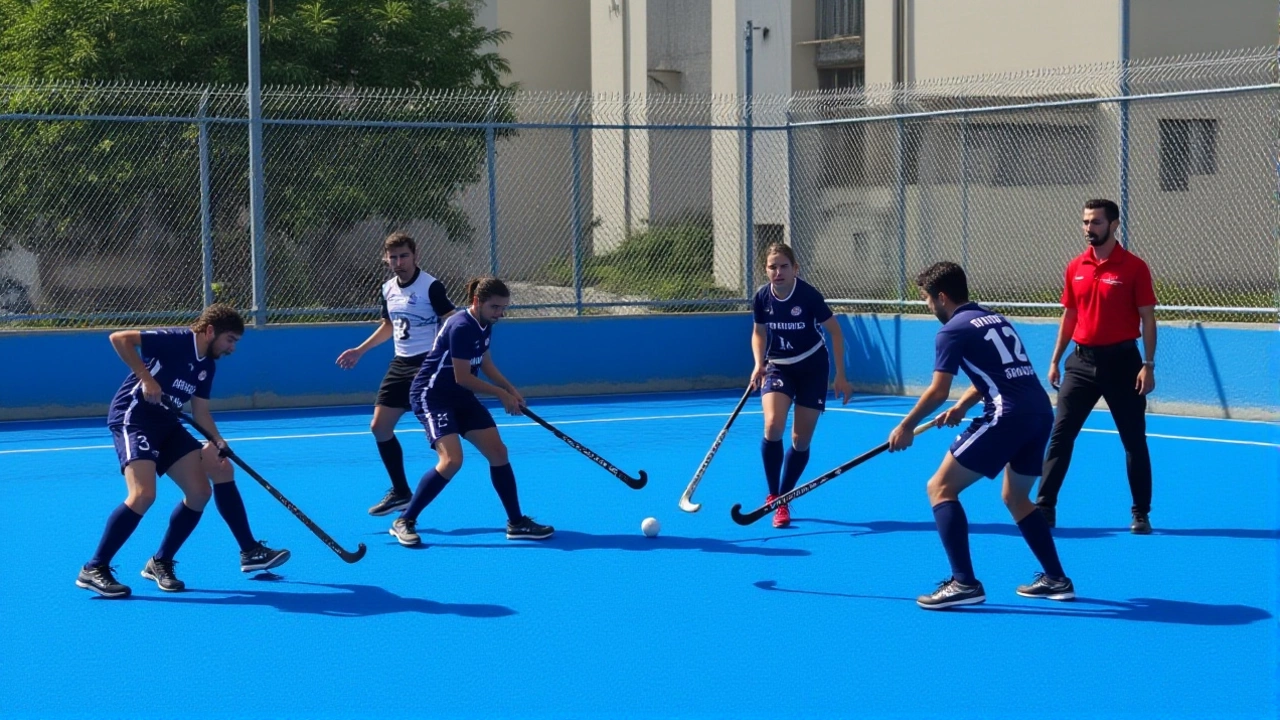
When the final whistle blew at Karnal’s AstroTurf Hockey Stadium on November 18, 2025, the roar of the crowd wasn’t just for the score—it was for a statement. Rajaa Karn Academy didn’t just beat Tamil Nadu Hockey Academy—they obliterated them, 15-10, in a game that felt more like a masterclass than a match. And the star? Preetham Sivach, who scored an astonishing 11 goals in a single outing, leaving defenders scrambling and fans breathless. This wasn’t just another game in the Third All India Women’s Hockey Academy ChampionshipKarnal. It was the moment the tournament truly came alive.
The Tournament That’s Bigger Than It Looks
Thirty-two women’s hockey academies from across India are competing in this year’s championship, a quiet revolution in grassroots sports. No big sponsor logos. No TV cameras. Just pure, unfiltered talent—girls from villages in Punjab, urban centers in Kerala, and remote towns in Odisha, all wearing the same jersey, chasing the same dream. The matches are 60 minutes long, with a 10-minute break, a format designed to test stamina, not just skill. And it’s working. Coaches Brijbhushan and Lalita, who’ve been running this academy for over a decade, say they’ve never seen this level of intensity. "These girls don’t play for applause," Lalita told me after the game. "They play because they’ve never been told they could."
More Than Just One Big Win
The 15-10 victory over Tamil Nadu wasn’t the only highlight. In another match, Round Class Academy from Punjab crushed City Hockey Eleven 6-0, showcasing a clinical, possession-based style rarely seen at this level. Meanwhile, Vidyapati Raja Academy came up blank—zero goals, zero points. And then there was Sonipat, where a player took a stick to the eye mid-game, still got up, finished the match, and led her team to a 9-7 win. No one talked about the injury afterward. Everyone talked about the grit.
It’s easy to overlook these moments when the headlines are dominated by the big scores. But that’s where the real story lies—in the quiet courage of a girl who gets back up after being knocked down, the coach who stays late to fix a broken shoelace, the parents who travel three hours just to watch their daughter play.
What’s Next? Finals, Funding, and the Bigger Picture
The championship runs through November 23, 2025, with four finals scheduled for juniors and sub-juniors. The winners get a trophy, cash prize, and—more importantly—a pathway. Several players from this tournament have already been scouted by the Hockey India development squad. But here’s the twist: no one’s talking about it. Not the media. Not the state sports departments. The funding for these academies? Patchy. Some get ₹5 lakh a year. Others survive on donations from local shopkeepers.
And while Karnal’s girls are still playing, another major event looms: the Khelo India University Games 2025Rajasthan. Starting November 24, universities from Kerala, Manipur, Delhi, and Madhya Pradesh will compete in badminton and archery. The irony? Many of these athletes came from the same academies as the ones playing in Karnal. But the spotlight? It’s only on the universities.
The Bigger Game
There’s a quiet tension here. On one side, you’ve got a grassroots movement—girls who’ve never worn a national jersey but train on cracked concrete pitches. On the other, you’ve got institutional programs with better funding, better gear, better visibility. The Tamil Nadu team that lost in Karnal? They’ve won national titles before. But they’re still flying economy, sleeping in hostels, eating meals packed by their coaches.
This isn’t just about hockey. It’s about who gets seen, who gets supported, and who gets left behind. The fact that Preetham Sivach scored 11 goals in a single match—and no national outlet covered it—isn’t an accident. It’s a system.
Meanwhile, in Tamil Nadu, the Tamil Nadu Premier League (TNPL) Season 9Tamil Nadu is in full swing, with crowds packing stadiums for cricket. But the women’s hockey academy that trained many of those same athletes? Barely a mention.
And then there’s the 71st Senior National Kabaddi Championship 2025Tamil Nadu, where Haryana’s Rajesh Narwal dominated with 12 points against Tamil Nadu. Same state. Same athletes. Different sport. Different attention.
What’s the Real Score?
By November 23, a champion will be crowned in Karnal. But the real winner? The girl who walked off the field with a bloody eye and a smile. The coach who spent his own salary to buy new sticks. The parents who drove 200 kilometers just to see their daughter score her first goal.
The trophy? It’s nice. But the legacy? That’s what lasts.
Frequently Asked Questions
How did Preetham Sivach manage to score 11 goals in one match?
Preetham Sivach, a 19-year-old forward from Haryana, has been training under coach Brijbhushan since age 14. Her signature move—a quick drag flick from the left corner—has become nearly impossible to defend at this level. She’s also the team’s primary penalty corner specialist, and in this match, Tamil Nadu’s defense failed to mark her movement off the ball, leaving her open for seven direct attempts and four rebounds. Her 11 goals tied the record for most in a single match in the championship’s history.
Why is this tournament important for women’s hockey in India?
Unlike national leagues that focus on elite clubs, this championship gives grassroots academies—many run by local governments or NGOs—a platform. Of the 32 teams, 18 are from non-traditional hockey states like Odisha, Jharkhand, and Bihar. Many players here have never left their districts before. This is where future Olympians are discovered, not in big-city academies but in small-town fields with no floodlights.
What happens to players after the tournament ends?
Top performers are invited to trials for Hockey India’s Junior National Camp, which begins in December. However, only about 12 players from the entire 32-team field get selected each year. Many others return home with no follow-up support. Some get local coaching jobs; others quit. The lack of a formal scouting pipeline means talent is often lost—not because they aren’t good enough, but because no one’s looking.
How does this compare to previous editions of the championship?
The 2023 edition saw 24 teams and an average of 4.2 goals per match. This year, with 32 teams and an average of 7.8 goals per match, the pace and skill have jumped dramatically. More teams are using advanced training methods—video analysis, GPS tracking, nutrition plans—funded by private donors. But the gap between well-funded and underfunded teams is wider than ever. The top 5 teams now have access to physiotherapists; the bottom 15 still use ice packs from local pharmacies.
Why is Tamil Nadu still competitive despite losing this match?
Tamil Nadu has one of India’s strongest women’s hockey pipelines, thanks to its school-level tournaments and state-sponsored academies. They’ve produced 11 national team players since 2018. Their loss in Karnal was an upset, but their consistency across multiple tournaments makes them perennial contenders. They lost 15-10, but their defensive structure and counter-attack strategy remain among the best in the country.
Is there any government support for these academies?
Minimal. The Haryana Sports Department funds Rajaa Karn Academy with ₹3.5 lakh annually—barely enough for uniforms and basic equipment. Tamil Nadu’s academy gets ₹7 lakh, but that’s spread across five teams. Most academies rely on crowdfunding, local businesses, or alumni donations. No central ministry has a dedicated budget for academy-level women’s hockey. The Khelo India scheme focuses on universities, not grassroots.